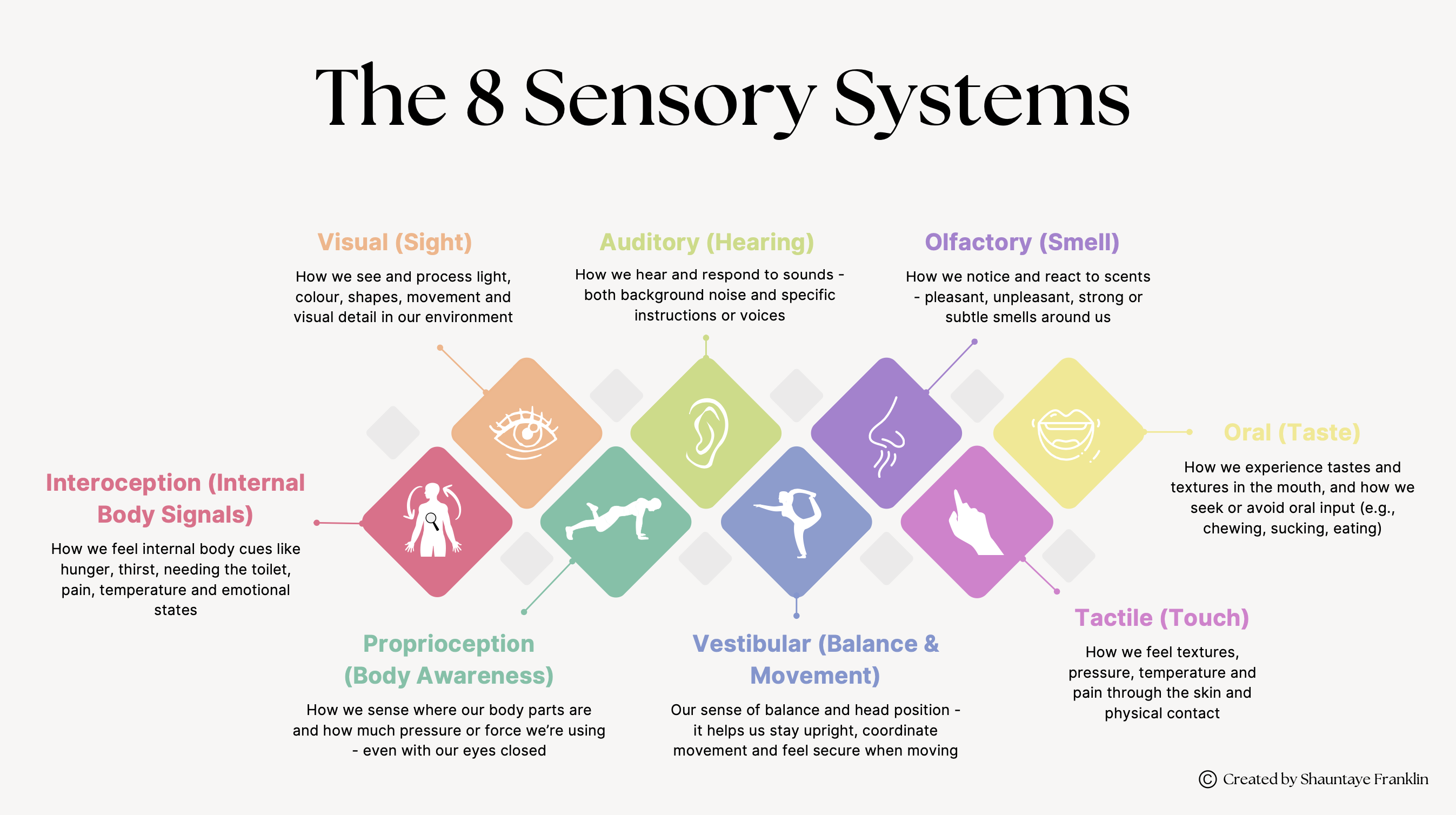
Children and young people experience the world through their senses. The brain constantly receives, interprets, and responds to information from eight sensory systems (Bundy & Lane, 2020). When this processing works effectively, pupils are calm, focused, and ready to learn.
Experiencing the world through the senses
For some children however, everyday sensory input feels overwhelming or underwhelming. Sounds may be painfully loud, movement constantly sought, or visual information distracting. These sensory differences affect attention, behaviour, and emotional regulation – key foundations for learning. From an educational psychology perspective, recognising sensory needs is vital for inclusion and wellbeing.
Why sensory-supportive classrooms matter
Understanding sensory processing offers a powerful lens for rethinking classroom behaviour. When adults appreciate whether a pupil is over-responsive (overwhelmed) or under-responsive (sensory-seeking), they can:
- Reframe behaviours as communication rather than choice
- Adjust environments to reduce stress and distraction
- Offer strategies that help pupils return to a regulated, ready to learn state
It is estimated that around 5-15% of children may experience sensory processing differences (Galiana-Simal et al., 2020). Without support, these can be misinterpreted as defiance or disengagement. With support, classrooms become calmer and learning more meaningful.
A whole-school intervention: what we did and what changed
To address these issues, the Sensory Supportive Classrooms Intervention was developed and delivered by two Occupational Therapists (OTs). This intervention was run in a special school in the West Midlands, supporting pupils with learning needs and additional needs such as autism. Staff received:
- Classroom environment audits (before and after intervention)
- Sensory awareness training
- Individual consultations
- Training in purposeful use of a Sensory Integration room
Evaluation showed statistically significant improvements in staff knowledge of the senses, understanding of sensory processing, confidence in identifying sensory differences, and creating sensory-friendly classrooms.
Teachers described the training as realistic and immediately usable:
“The suggestions on my audit write-up are really useful… things I can easily try such as flexible seating and reviewing my sensory box.”
Staff also reflected on individual pupils’ needs, from oral supports like sports bottles to purposeful use of sensory equipment. However, some noted that older students could feel self-conscious using tools, highlighting the need for more age-appropriate, discreet options.
Practical strategies for sensory-supportive classrooms
The OTs’ recommendations can be grouped into seven areas, each directly linked to engagement and learning:
- Adaptable environments: flexible seating (wobble stools, bean bags), organised spaces to reduce visual overload
- Calming lighting: natural light, dimmable lamps, filters for fluorescent lighting
- Noise management: quiet break zones, noise-cancelling headphones
- Sensory equipment: fiddle toys, weighted lap pad, body sock, sunglasses/tinted glasses, wobble cushion, TheraBand, putty, or single-use chewable items. Create sensory boxes with sets of sensory tools that are changed regularly to maintain interest, avoid overstimulation, and match pupils’ changing needs.
- Visual supports: timetables, cues, labelled areas to increase predictability
- Safe break areas: calming spaces/pop up tent with pillows, bean bag/comfy chair, cuddle ball, and sensory bins. These bins are containers filled with tactile or visual materials such as rice, water, dry pasta, beads, or soft fabrics, along with small items to scoop or sort. These allow pupils to explore and regulate in a structured way.
- Predictable routines: consistent timetables and structured transitions to lower anxiety
Overcoming barriers
While benefits from the intervention were clear, there are still barriers to consider:
- Funding/resources: not all settings have sensory rooms, but low-cost options such as sensory corners or weighted backpacks can still make an impact
- Access to expertise: without regular OT input, training sensory champions within schools can build sustainable capacity
- Embedding practice: sensory strategies should be woven into daily routines rather than seen as add-ons
- Professional development: ongoing CPD helps staff keep knowledge up to date and adapt strategies as needs change
From an educational psychology standpoint, these barriers are familiar across inclusion work. Creative, collaborative approaches are key to embedding sustainable change.
Implications for Educational Psychology practice
Sensory processing is not solely an occupational therapy concern. It intersects directly with psychology, learning, and behaviour. As Educational Psychologists, we can play a central role through:
- Assessment: considering sensory needs in casework, showing how they influence attention, behaviour, and social participation
- Consultation: supporting staff to reflect on links between behaviour and sensory needs and co-develop systemic solutions
- Whole-school work: supporting audits, embedding universal strategies, and building a culture of sensory awareness
- Staff development: linking sensory needs to theories of self-regulation, executive functioning, and emotional wellbeing, encouraging reflective practice
Final thoughts: embedding sensory awareness
Every child deserves to feel safe, understood, and ready to learn. Sensory-supportive classrooms are key to inclusion and not a luxury or specialist add-on. As Educational Psychologists, we can help schools see that small changes, from flexible seating to predictable routines, can make a big difference.
By embedding sensory awareness into everyday teaching, schools create environments where all learners can thrive. Together, educators, families, and psychologists can ensure that behaviour is recognised as a indication of wider needs, sensory differences are respected, and classrooms become places of safety, understanding, and flourishing.
References
Bundy, A. C. & Lane, S. J. (2020). Sensory integration: Theory and practice (3rd ed.). F.A. Davis.
Galiana-Simal, A., Vela-Romero, M., Romero-Vela, V.M., Oliver-Tercero, N., García-Olmo, V., Benito-Castellanos, P.J., Muñoz-Martínez, V.E., & Beato-Fernandez, L. (2020). Sensory processing disorder: Key points of a frequent alteration in neurodevelopmental disorders. Cogent Medicine, 7.