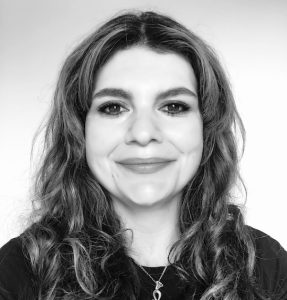
I was born in London to immigrant parents who met in the UK as students. I was raised in a home defined by two different Arab cultures and dialects. There was a deep appreciation and pride for my heritage; my mother insisted I only spoke Arabic at home.
I attended Arabic school every Saturday, despising the fact that I was missing Saturday morning cartoons and Going Live! At home, I ate hummus, olives and vine leaves, was told it was rude to make eye contact with adults when being told off, and never had a babysitter (I accompanied my parents everywhere regardless of the hour). Sleepovers were strictly off-limits.
With my friends, however, life looked different. We shared chips smothered in ketchup, met in the park, and used phrases like ‘wicked’ or ‘you get me’ while rarely straying out of West London. I was one person at home and another with my peers. My friends were doing the same; we even found ourselves adapting for each other’s parents, embracing the overlap in our cultures. For my best friend with Ghanaian parents, it felt natural to call her mother and father ‘Auntie’ and ‘Uncle’ just as I was taught at home.
Biculturalism: an ongoing process
My friends and I were experiencing a psychological phenomenon known as biculturalism. Originally coined from the term acculturation, biculturalism describes an individual’s ability to navigate successfully between two different cultures. As Schwartz and Unger (2010) state, it represents “comfort and proficiency with both one’s heritage culture and the culture of the country or region in which one has settled.” Early acculturation research began with the viewpoint that a minority group’s acceptance of a new culture was connected to the rejection of their original one (Mesquita, De Leersnyder, & Jasini, 2019). This has since been overwhelmingly disproved; evidence shows a clear ability to embrace both (Spiegler, & Leyendecker, 2017).
As far as I was concerned, I was English and Arab and – importantly – proud. However, upon reflection, I realise I was living in a ‘London bubble’. My first memory of feeling different in a negative way was at university. During a movie night, a group of friends sat down to watch True Lies. It was called a ‘classic’, and there was genuine disbelief that I had not seen it. The film stars Arnold Schwarzenegger as an undercover spy saving his family from a group of Arab terrorists. I remember feeling highly offended and uncomfortable while my friends cheered it on. The film vilifies Arabs as not only malicious but also unintelligent. Interestingly, my friends hadn’t made the connection; they only realised the impact when I shared my experience of watching it.
Four years later, I had moved back to London and qualified as a teacher. One day, while on playground duty, I watched a group of Year 7s running, screaming, and laughing as Ali chased them. Ali had recently arrived from Iraq; his English was limited, and he had been placed in my form class because I spoke Arabic. Curiously, I pulled him aside and asked what they were playing. Ali enthusiastically shared that he was ‘the bomber’. He had to chase the other children and catch them and, when he did, they would ‘explode’. Ali was happy; he was finally included. He seemed completely oblivious to why he had been cast in that specific role.
I was not sure how to react. I knew the children intended no harm; after all, they were acting out a stereotype perpetrated by news, films, and books. A stereotype our curriculum made no attempt to address. We were not taught in school that the first university was founded in 859 AD by Fatima al-Fihri in Morocco, or that Algebra was created by Muhammad ibn Musa al-Khwarizmi in Baghdad during the 9th-century Islamic Golden Age, or that it was the Yemenis that introduced the world to drinking coffee. When learning about the Ancient Egyptians, it was often joked that ‘aliens’ must have built the pyramids. For me, the underlying message was clear: colonialism was what made us civilised.
Identity and acceptance
While I navigated these worlds, I often struggled with my identity. On reflection, I still do. I have lived through September 11th, the Iraq War, Brexit, and Gaza. Now I live with the possibility of the Reform party winning in the next election.
It is not unusual to receive comments like, “You don’t look Arab!” or “You don’t look Muslim”, and the surprise that being Arab is not synonymous with being Muslim. While I am a Muslim, the automatic assumption of my faith based solely on my ethnicity ignores the rich diversity that exists within both identities. It simplifies a complex reality that overlooks the millions of Arabs who are Christian, Druze, or secular, as well as the millions of Muslims who are not Arab. Now, I approach such remarks with curiosity: “How did you expect me to look?” The answers range from “You’re too pale” to “You aren’t wearing a headscarf.”
Recently, I was asked whether Arabs slept in beds. Airports remained a nightmare until I took my partner’s surname; suddenly, I was no longer the one asked to take my shoes off for a search. Even the ‘ethnicity boxes’ on official forms are a struggle. There is rarely an ‘Arab’ box. Am I Asian, African, Mixed, or ‘Other’? Interestingly, Arabs often categorise themselves by ethnicity rather than race. When visiting family abroad, I am referred to as ‘the English girl’. I find myself navigating two cultures and, at times, feeling accepted by neither and sometimes confused.
I still wonder “where do I belong?” Yet, I would never change who I am. I feel a sense of privilege in being bilingual and experiencing both cultures as a native. Literature suggests this exposure provides cognitive advantages, as biculturals develop the ability to switch between different cultural systems (Hong et al., 2000). Tadmor and Tetlock (2006) explain this through the Acculturation Complexity Model. This suggests that those who embrace both cultures equally tend to experience cultural conflicts and a need to resolve these conflicts. Attempts to resolve cultural differences tend to involve ‘integrative complexity’, the cognitive ability to know, accept, and integrate different and sometimes conflicting perspectives on the same issue. Notably, individuals who tend to favour one culture over the other are not likely to engage in such complicated cognitive processes.
How my identity has shaped me as an Educational Psychologist
My experience has shaped my work as an Educational Psychologist. I am deeply curious about the lived and living experiences of the children I work with. For example, we tend to chat about the food they eat, the languages they speak, and how they navigate their experiences. Sometimes when they have shared music from their heritage or what they eat at home they will comment that it sounds ‘weird’. I would normally smile and say ‘it sounds great.’ After alI, I come from a culture where we congratulate each other for having a haircut or a shower, where my mother calls me ‘the soul of my soul’, where over-feeding is an expression of love, where natural remedies are passed from generation to generation, and where mothers refer to their children as ‘Mum’ and fathers refer to them as ‘Dad’. I also come from a culture where we can have a 20-minute conversation about the weather, find ourselves naturally forming a queue, where putting the kettle on means ‘I’m here to listen’, and where on Sundays we have a full roast, complete with yorkshire puddings, gravy, and mash.
Chimamanda Ngozi Adichie talks about the “danger of a single story“: the idea that an oversimplified, stereotypical view of a people inevitably creates prejudice. I often reflect on how deeply I dislike the single story I have been assigned, and I am particularly conscious of the importance of preventing this for the children we work with. I view it as a privilege to be able to question, challenge, and dismantle these narratives, whether in supervision or consultation.
Unlike many of my colleagues, my foundational background is not in psychology, but in mathematics. I found psychology much later in life, arriving with the immediate realisation that Western psychological frameworks do not always align with my lived experiences or cultural views. As a result, I feel strongly that we must be intentional in how we apply our practice. How we must use psychology to promote tolerance, curiosity, and empathy, rather than justifying what is wrong and potentially becoming accomplices in the very systems we have set out to challenge.
Challenging the Deficit Lens
As Educational Psychologists, we must recognise that we cannot be neutral; to claim neutrality is, in itself, to enable the further oppression of the most vulnerable. Importantly, we must reflect on how, not so long ago, educational psychology in the UK was weaponised to place Black Caribbean children in special schools where they were labelled as ‘Educationally Subnormal’. We must also acknowledge that educational systems, such as exclusions and suspensions, continue to disproportionately harm children from certain ethnic minorities today.
Given our profession’s troubled history I think that we have a professional and moral obligation to account for and challenge the sociopolitical context in which our children and families live. I have seen the deficit lens placed on children from ethnic backgrounds. For example, paperwork that highlights a child’s struggle to use a knife and fork as a developmental ‘need’, not realising that they are a pro at using bread as a utensil; or highlighting a child as ‘pre-verbal’ when they are actually beginning to find their voice in their home spoken language.
It is our role to create curiosity during consultation and foster relationships between the school and families, ensuring families do not experience shame because they do things differently. I have worked with refugee families with limited English who, out of fear, have stopped speaking their native language at home, terrified that their heritage will be viewed as a barrier to their child’s integration. I have worked with children described as ‘rude’ because they have struggled to give eye contact.
Changing systems is not about attending or delivering a training course on racism and discrimination; it is about embedding these ideals in our everyday practice and continuing to challenge ourselves and each other to ensure we continue to learn and evolve to support the children we work with.
References
Hong, Y. Y., Morris, M. W., Chiu, C. Y., & Benet-Martínez, V. (2000). Multicultural minds: A dynamic constructivist approach to culture and cognition. American Psychologist, 55(7), 709–720. https://doi.org/10.1037/0003-066X.55.7.709
Kulig-Reid, K., & O’Hare, D. (2023, April 24). ‘Subnormal’: Time the educational psychology profession apologised? The Psychologist. https://www.bps.org.uk/psychologist/subnormal-time-educational-psychology-profession-apologised
Mesquita, B., De Leersnyder, J., & Jasini, A. (2019). The cultural psychology of acculturation. In D. Cohen & S. Kitayama (Eds.), Handbook of cultural psychology (2nd ed., pp. 502–535). The Guilford Press.
Schwartz, S. J., & Unger, J. B. (2010). Biculturalism and Context: What Is Biculturalism, and When Is It Adaptive?: Commentary on Mistry and Wu. Human development, 53(1), 26–32. https://doi.org/10.1159/000268137
Spiegler, O., & Leyendecker, B. (2017). Balanced cultural identities promote cognitive flexibility among immigrant children. Frontiers in Psychology, 8, Article 157. https://doi.org/10.3389/fpsyg.2017.00157
Tadmor, C. T., & Tetlock, P. E. (2006). Biculturalism: A model of the effects of second-culture exposure on acculturation and integrative complexity. Journal of Cross-Cultural Psychology, 37(2), 173-190.